Shockwave therapy: focused and radial treatment, indications and what to expect
Focused shockwave delivers high-energy sound waves into the painful area to relieve pain, calm inflammation, stimulate blood flow and support the tissue’s own repair. It is used for chronic problems such as tennis elbow, plantar fasciitis, frozen shoulder, trigger finger, De Quervain’s tenosynovitis and patellar tendinopathy, helping to ease pain and restore activity. Advanz uses the German PIEZOWAVE focused shockwave system, with treatment depth adjusted to how deep the problem lies.
Book a physiotherapy appointmentWhat is shockwave therapy?
Shockwaves were first used to break up kidney and urinary stones, and in some cases of poorly healing bone. Later research looked at how a suitable dose can affect tendons and soft tissue: improving local blood flow, changing how pain is felt, and treating chronic or calcific tendinopathy and muscle strain.[1] [2]
It is now widely used for overuse and chronic pain around the neck and shoulder, arm, lower back, hip, knee and ankle. A physiotherapist assesses whether it is suitable before treatment starts.
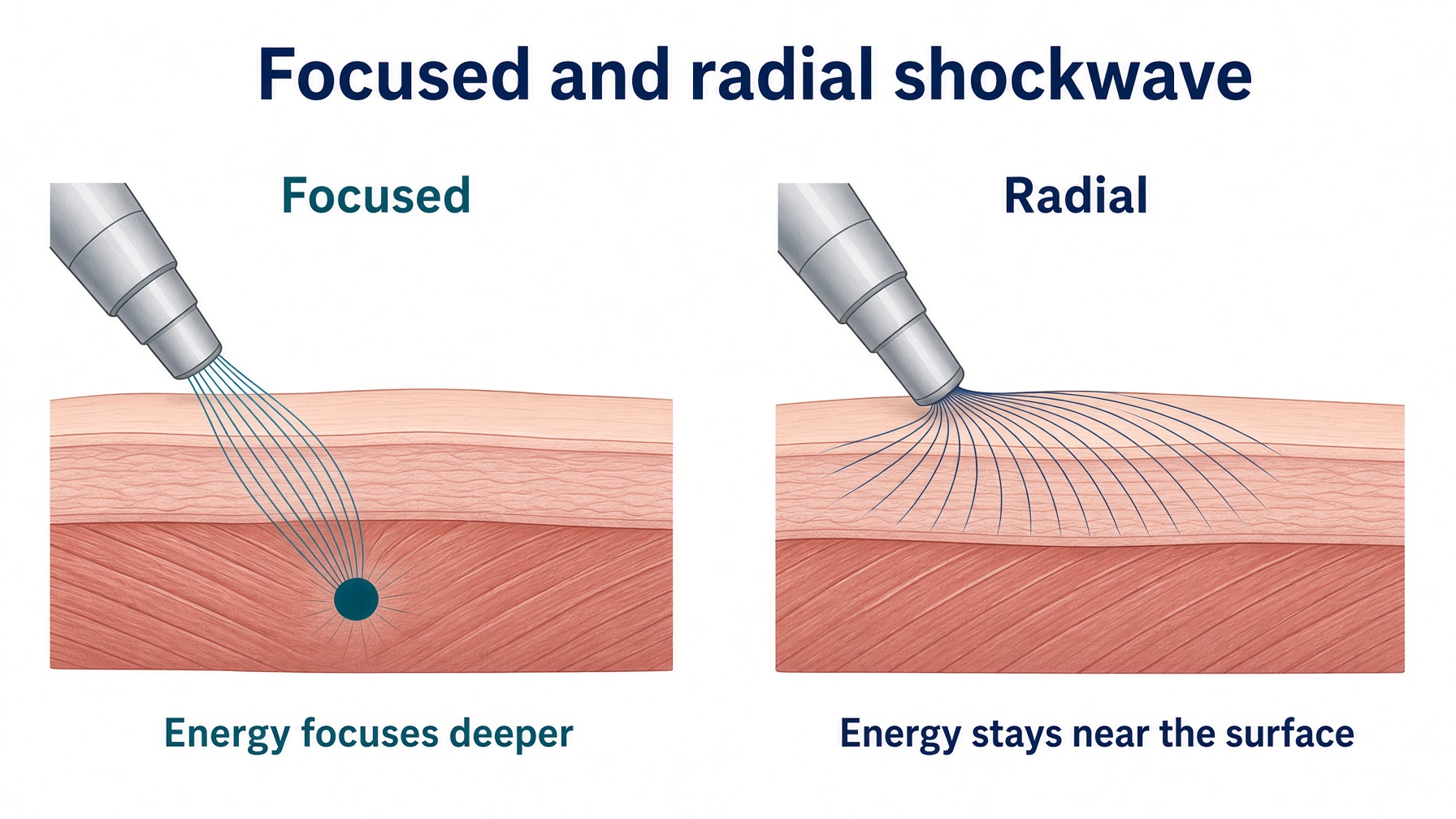
Focused or radial shockwave?
Focused shockwave can be set to the depth of the injury, with an effective depth of about 125 mm, so it suits deeper soft tissue. Radial shockwave cannot be focused in the same way; most of the energy stays near the skin and suits more superficial tendons. Advanz uses the German PIEZOWAVE focused system.
Common indications
The original page lists the following. Whether shockwave is used depends on assessment, how long the problem has lasted, and any reasons not to treat.
- Tennis elbow and golfer’s elbow
- Plantar fasciitis
- Trigger finger
- Frozen shoulder, and chronic or calcific tendinopathy
- De Quervain’s tenosynovitis (mummy thumb)
- Piriformis syndrome
- Patellar tendinopathy
It can also be aimed at muscle trigger points for overuse pain around the neck and shoulder, arm, back, hip, knee or ankle.
Where it is used
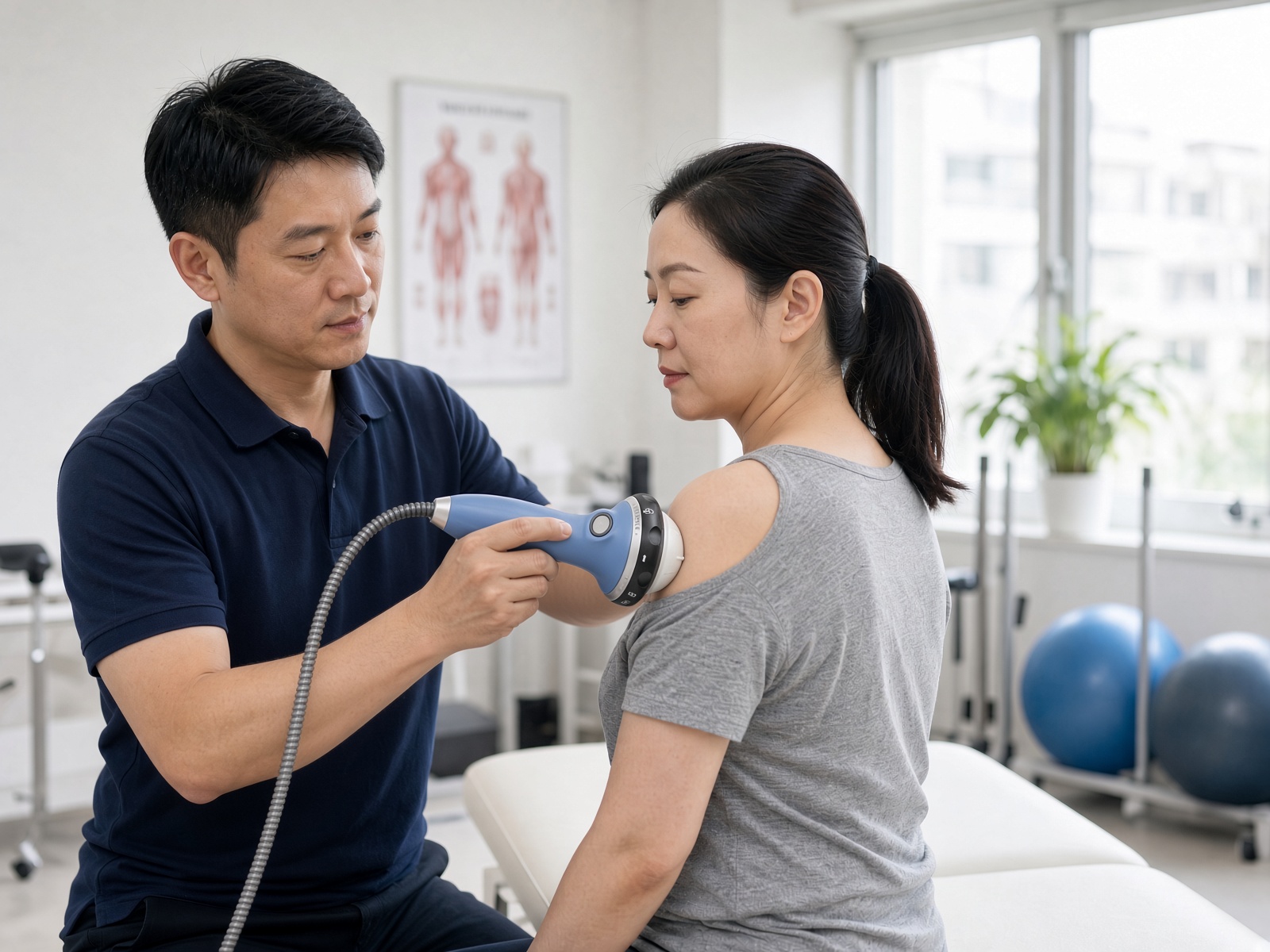
Shoulder
Used for frozen shoulder or chronic rotator cuff strain, to relieve pain and support tendon recovery.
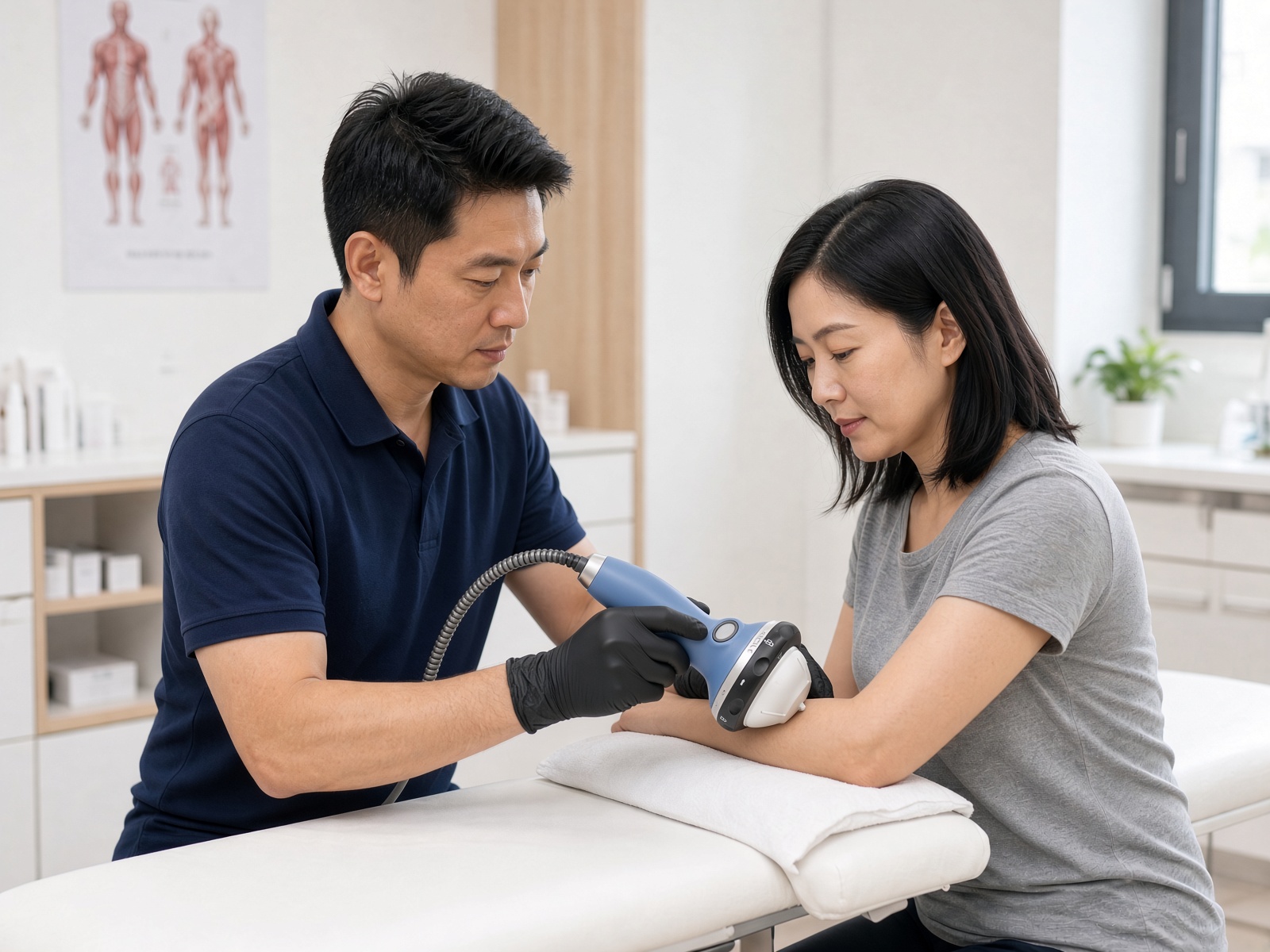
Tennis or golfer’s elbow
Aimed at the tendon attachment on the outer or inner elbow, to reduce pain and inflammation and support repair.
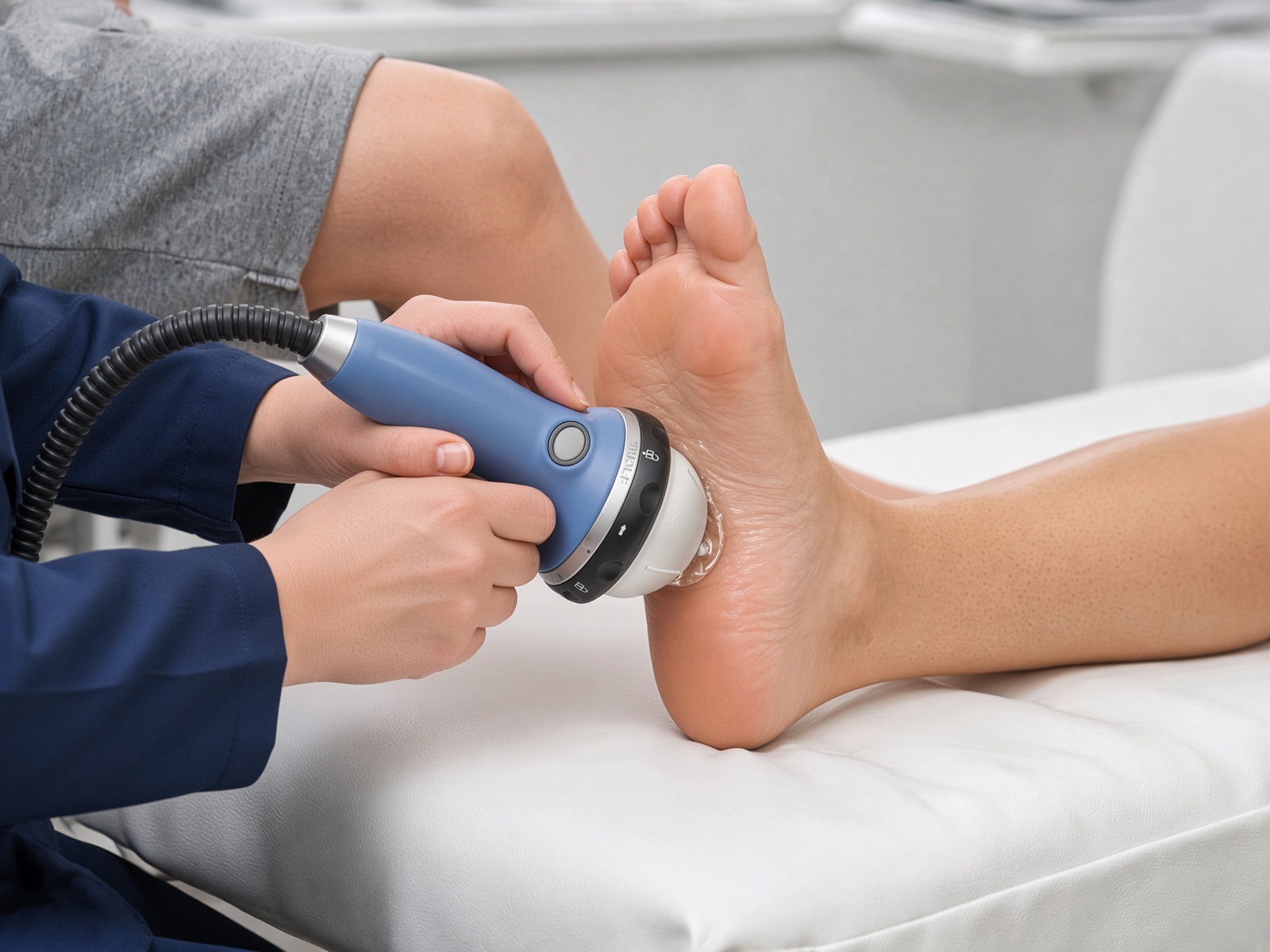
Plantar fasciitis
Applied to the sole and heel to ease plantar pain and support fascia recovery.
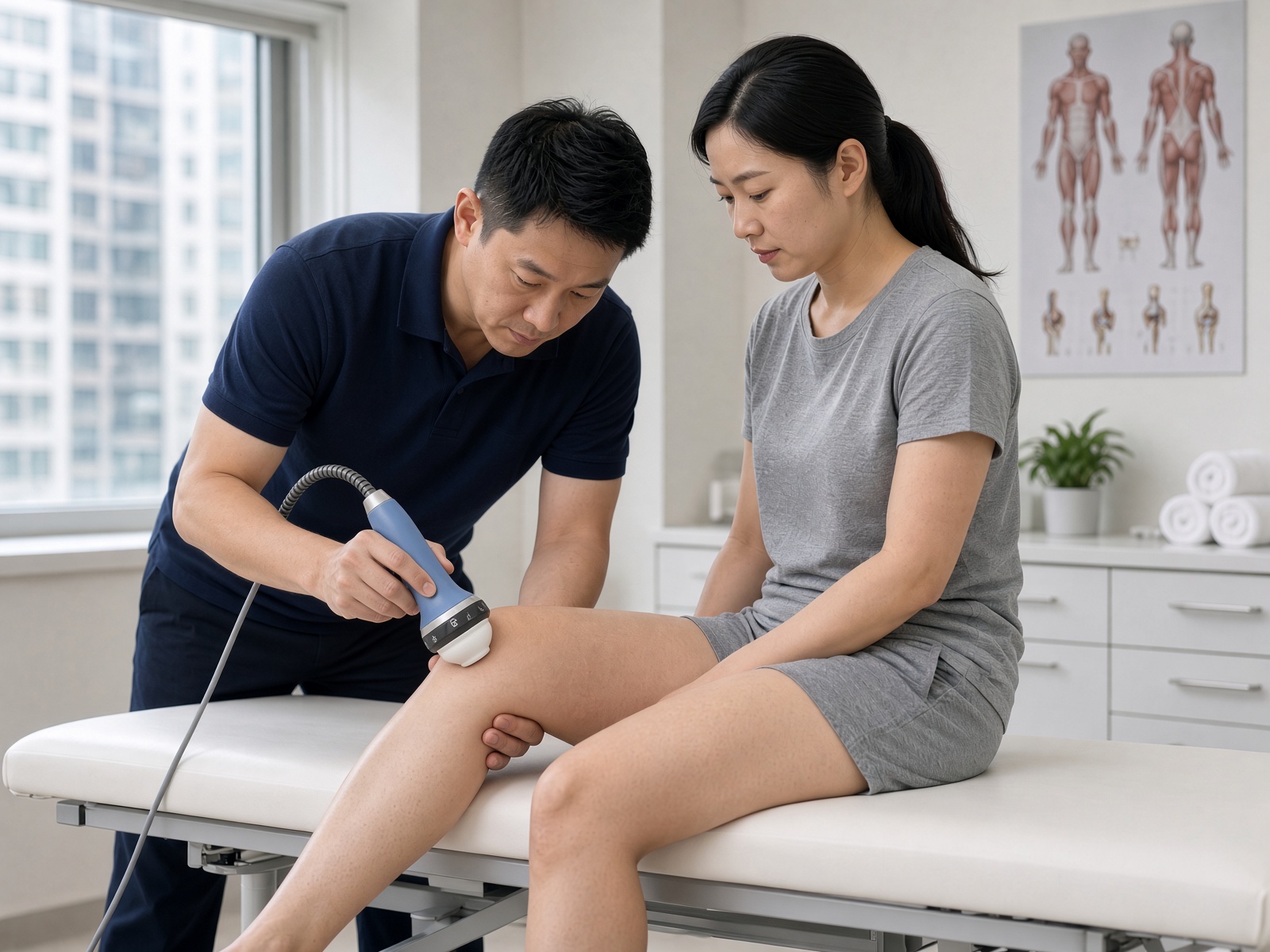
Patellar tendon
Used for patellar tendinopathy, to ease pain below the kneecap and support tendon repair.
What a session involves
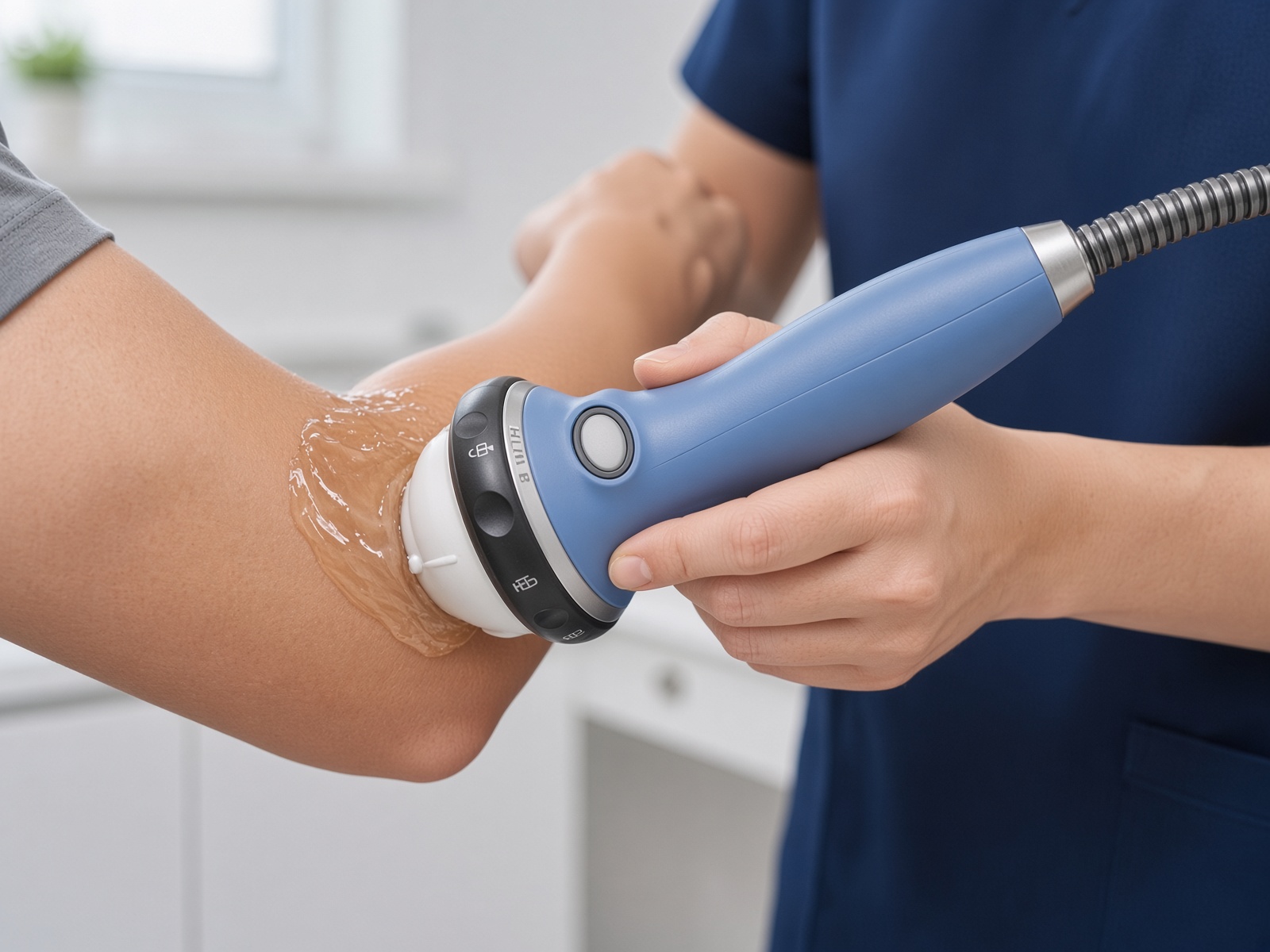
The physiotherapist sets the focus depth and intensity, and the time depends on how many areas are treated and how large they are. During treatment the sore spot can feel achy, painful or refer discomfort; aiming off the painful spot usually feels much milder. Each area receives about 2,000 to 4,000 pulses. Sessions are often once to three times a week, with a course of about six to eight sessions.
For one to two days afterwards the area may feel sorer, tighter or slightly swollen. A few people notice mild redness or bruising, which usually settles within about two days. Contact the clinic if redness, numbness or pain keeps getting worse.
Common questions
Does it hurt?
The treated spot can feel achy or sore. Intensity is adjusted to what you can tolerate, and treatment should not continue through pain you cannot bear. Brief soreness afterwards is not the same as a new injury.
Should I rest afterwards?
Avoid heavy loading of that area on the day of treatment. Light activity as advised is better than prolonged complete rest as the only plan.
Who should not have it?
Tell your physiotherapist if the area is infected or has an open wound, if there is a known tumour, if you are pregnant and the area is near the abdomen or lower back, if you bleed easily, or if you have had a recent steroid injection there. Suitability is decided individually.[1] [2]
Book shockwave therapy
Call or WhatsApp the clinic nearest you. Appointment times depend on availability and a professional assessment.
Tsim Sha Tsui Clinic
Mon–Fri 10:00am–7:00pm
Sat 10:00am–3:00pm
Causeway Bay Clinic
Mon–Fri 10:00am–7:00pm
Sat 9:00am–2:00pm
Tin Shui Wai Clinic
Mon–Fri 9:00am–7:00pm
Sat 9:00am–2:00pm
Tsuen Wan Clinic
Mon–Fri 10:00am–7:00pm
Sat 10:00am–3:00pm
Mei Foo Clinic
Mon–Fri 10:00am–7:00pm
Sat 10:00am–3:00pm
Tuen Mun Clinic
Mon–Fri 10:00am–8:00pm
Sat 10:00am–3:00pm
Sha Tin Clinic
Mon–Fri 10:00am–7:00pm
Sat 10:00am–3:00pm
Sources
- NICE HTG200: Extracorporeal shockwave therapy for refractory plantar fasciitis. Evidence on how well it works is inconsistent; no major safety concerns are raised.
- NICE HTG426: Extracorporeal shockwave therapy for Achilles tendinopathy.
